Free tracked US shipping on every order

What Power Bank Do You Need for Heated Gear?
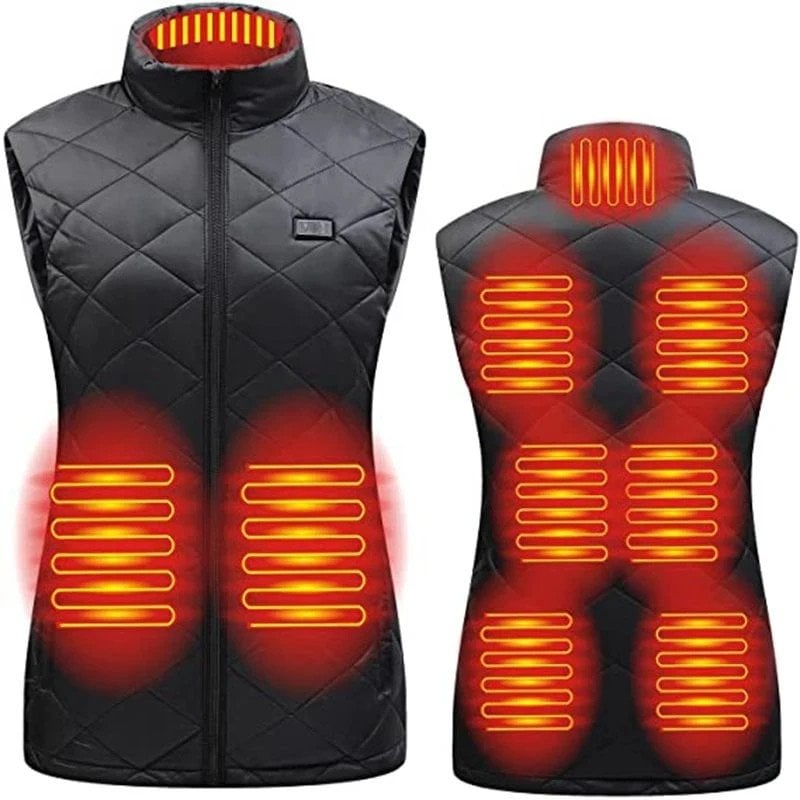
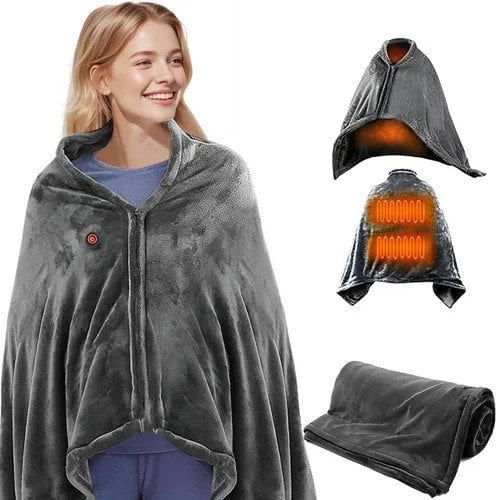
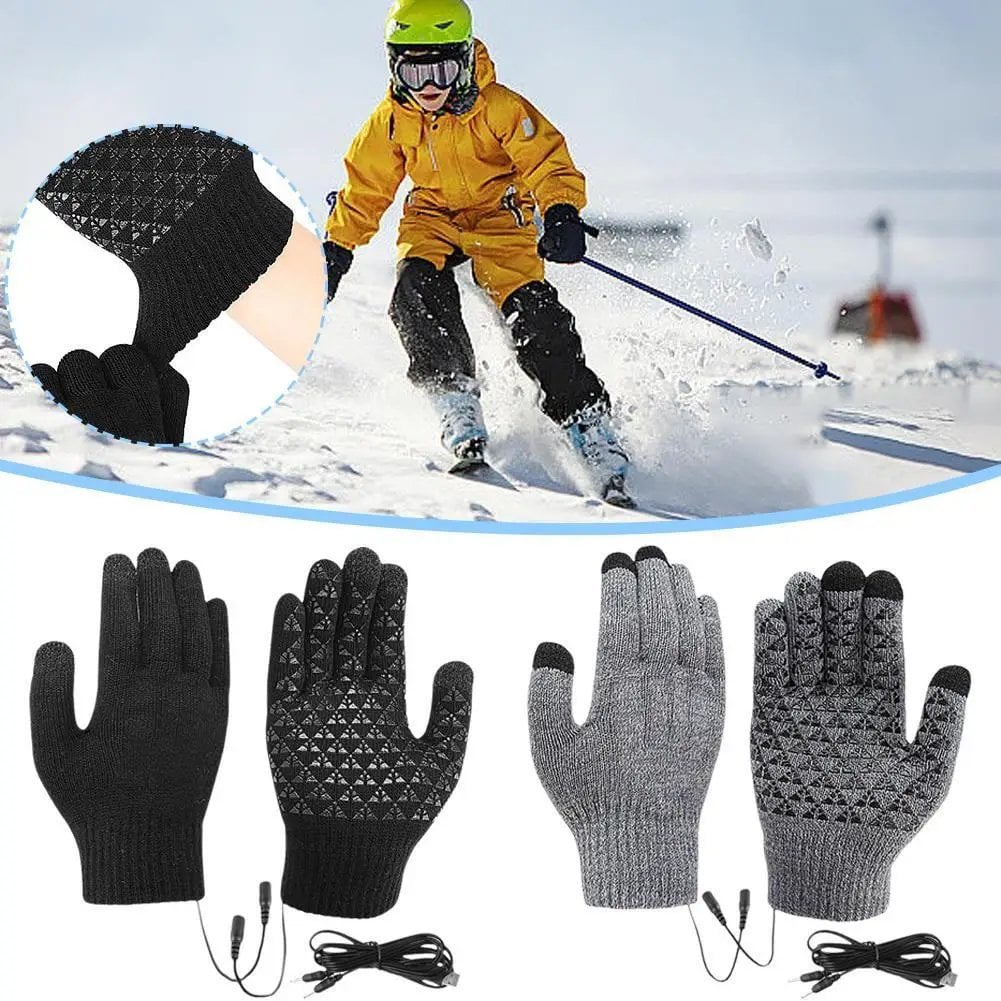
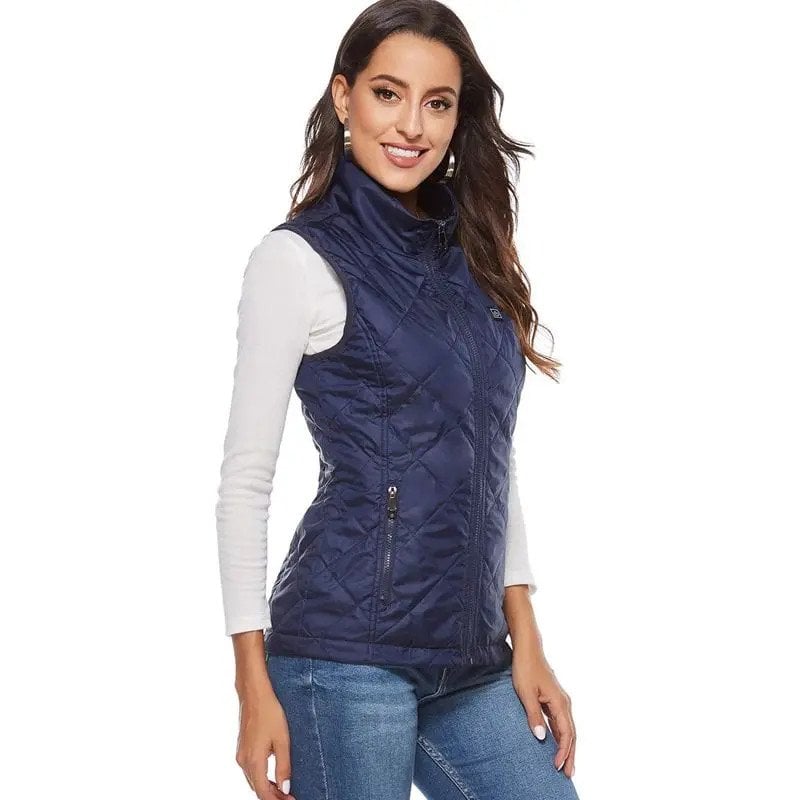
USB heated gear is often sold without a battery. You bring your own power bank, and the gear turns what it supplies into warmth. That is the case for our vest, gloves, foot warmer, seat cushion and wearable blanket: each product page says the power bank is not included.
The good news is that you may already own one that works. This guide explains what to look for on a power bank's label, how capacity relates to run time, and what the rules are if you are flying with one this winter.
Step 1: check the output (5 V USB)
Every power bank has a small block of text printed on it, usually on the back or on one end. Look for the line that starts with "Output". It lists a voltage and a current for each port, written something like 5V 2A or 5V 3A.
- Voltage (V). 5 V is the standard USB voltage, and it is what USB heated gear like ours runs on.
- Current (A). This is the most the port can supply. Our vest and foot warmer pages both ask for a 5 V, 2 A supply. A port that can supply 2 A or more is fine, because the gear only draws what it needs.
Multiply the two and you get watts (W), the rate at which energy is delivered. A port that supplies 5 V at 2 A can deliver up to 10 W.
What about fast-charging ports?
Many newer power banks have USB-C ports with Power Delivery, or USB-A ports with a fast-charging mode. These start at 5 V and only move to a higher voltage when the connected device asks for it. That is why simple 5 V gear can usually run from them. If you are not sure about a particular combination, the manuals for your gear and your power bank are the place to check.
Ports and plugs
Look at the plug on your gear's cable and make sure the power bank has a matching port, or that you have a suitable adapter. If you plan to run two items at once, such as a vest and a pair of gloves, you need two usable ports, and the power bank's total output has to cover both. Two items also share the same stored energy, so each one runs for less time than it would on its own.
Step 2: understand capacity
Capacity is how much energy the power bank holds. It is usually printed in milliamp-hours (mAh), and many power banks also list watt-hours (Wh).
The mAh figure describes the battery cells inside, which run at a lower voltage than USB, commonly 3.6 V or 3.7 V. Watt-hours take the voltage into account, so they are the better number for comparing power banks and for working out run time. If only mAh is printed, you can convert it using the cell voltage, which is usually printed beside it:
Wh = mAh × cell voltage ÷ 1,000
For example, a 10,000 mAh power bank with 3.7 V cells holds about 10,000 × 3.7 ÷ 1,000 = 37 Wh. A 20,000 mAh power bank with the same cells holds about 74 Wh.
Step 3: estimate run time (a worked example)
Here is the arithmetic in principle. The numbers below are an example to show the method. They are not measurements of any of our products, and real gear varies with the heat setting and the weather.
Say a heated item draws 10 W, the most a 5 V, 2 A port can supply. With the 37 Wh power bank from the example above:
37 Wh ÷ 10 W = 3.7 hours, in theory.
In practice, expect less than the simple math:
- Some energy is lost turning the cell voltage into 5 V USB output.
- Lithium batteries give less in the cold, and heated gear is, by its nature, used in the cold.
- Power banks hold less as they age.
Two things work in your favor. A lower heat setting draws less than the maximum, so the same power bank lasts longer. And capacity scales simply: at the same draw, a power bank with twice the watt-hours runs about twice as long.
The useful takeaway is not a single number but a way to plan. If a power bank does not last as long as your time outside, you can choose a larger one, carry a second one, or use a lower setting.
Practical tips for cold days
- Keep it warm. Carry the power bank in an inside pocket rather than an outer one.
- Charge it the night before. A charge indicator on the power bank helps you see what is left.
- Let a cold power bank warm up before charging it. Bring it back to room temperature first, and follow its own instructions.
- Mind the size and weight. More capacity usually means a heavier, bulkier power bank. Think about which pocket it will live in.
- Watch for auto-off. Some power banks switch their output off when the load is very small. If yours keeps turning off, check its manual for a low-current or always-on mode.
- Keep the connection dry. Snow and rain do not belong in a USB port.
Flying with a power bank
If you are taking heated gear on a winter trip, the power bank is the part to plan for. As general guidance, these are the FAA's rules for passengers:
- Carry-on only. Spare lithium batteries, power banks included, go in your carry-on bag, not your checked bag. If your carry-on gets checked at the gate, take the power bank out and keep it with you in the cabin.
- Up to 100 Wh: allowed in your carry-on.
- Over 100 Wh, up to 160 Wh: only with your airline's approval, and no more than two of these larger spare batteries.
- Over 160 Wh: not allowed on passenger aircraft.
- Protect it from short circuits. Keep a spare battery in its retail packaging, a case or a snug pouch so its contacts cannot touch metal.
The 37 Wh and 74 Wh examples above both sit under the 100 Wh line. If your power bank only shows mAh, use the formula above to work out its watt-hours before you pack.
Airlines can add their own rules on top of these, for example about using or charging a power bank during the flight, and rules change. Check with your airline before you fly, and read the FAA's PackSafe guidance for the full picture.
A short power bank checklist
- A USB output of 5 V, with at least the current your gear asks for (2 A for our vest and foot warmer).
- A port that matches the plug on your gear, one per item you want to run at once.
- A capacity in watt-hours that fits your day out, at a size and weight you are happy to carry.
- A charge indicator, so you know what is left before you head out.
- For flights: under 100 Wh keeps things simple.
Which of our items run from a power bank?
- Women's USB Heated Vest, 4 or 9 Zones: runs from a 5 V, 2 A USB power bank (not included).
- USB Heated Gloves: USB powered; you connect your own power bank (not included).
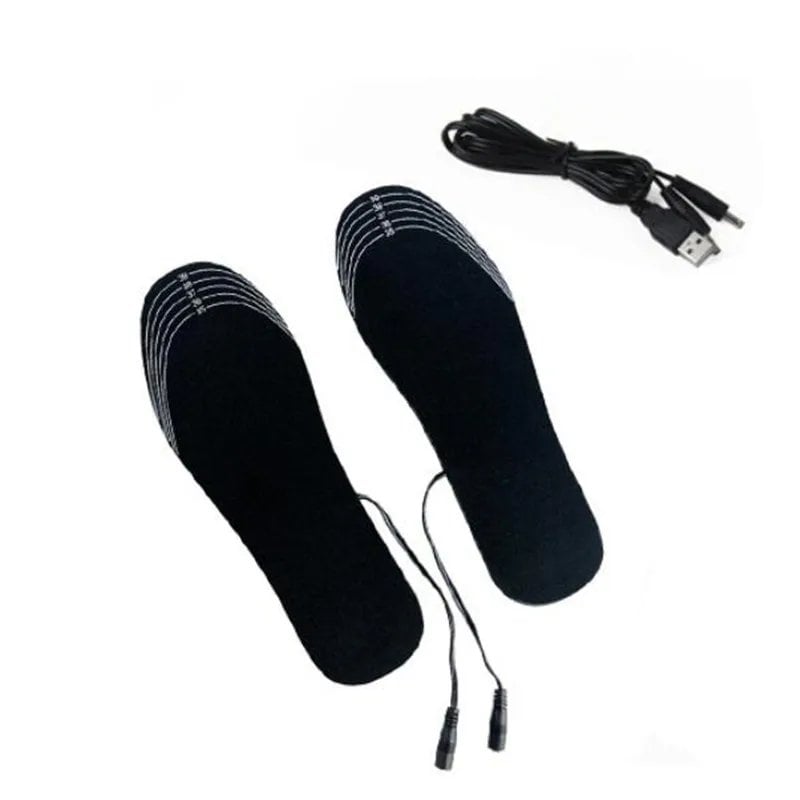
- USB Heated Insoles: carbon fiber insoles powered by USB, with one USB cable in the box.
- USB Heated Foot Warmer, 4 Heat Levels: a 5 V, 2 A power bank or adapter (not included).
- Quilted USB Heated Seat Cushion, 3 Heat Settings: 5 V USB from a power bank, a computer or a USB adapter (not included).
- Wearable USB Heated Blanket, 3 Heat Settings: USB powered; power bank not included.
You will find all of them in our Heated Gear collection.
Share